Port Mann tolls will “pay all costs” of $3.3 billion project

In the 2012-2013 budget released this week, the Government of British Columbia holds to its position that user tolls from the Port Mann Bridge will pay for all capital and operating costs associated with the 37-kilometre Port Mann/Highway 1 Project.  This in spite of a caution last year from B.C.’s Auditor-General, who said the revenue outlook from tolling is uncertain. (See Fraseropolis, September 30, 2011.)

The assertion that PMH1 will be self-financing is contained both in the main provincial budget document (pages 38 and 41) and in a new service plan from the Transportation Investment Corporation, the agency responsible for financing and building the project.  The language has been softened slightly; the previous service plan referred to “full cost recovery,” the current one speaks of recovering “the capital costs of the project as well as operating and maintenance costs,” with revenues reaching a net positive position by 2017/2018. Continue reading
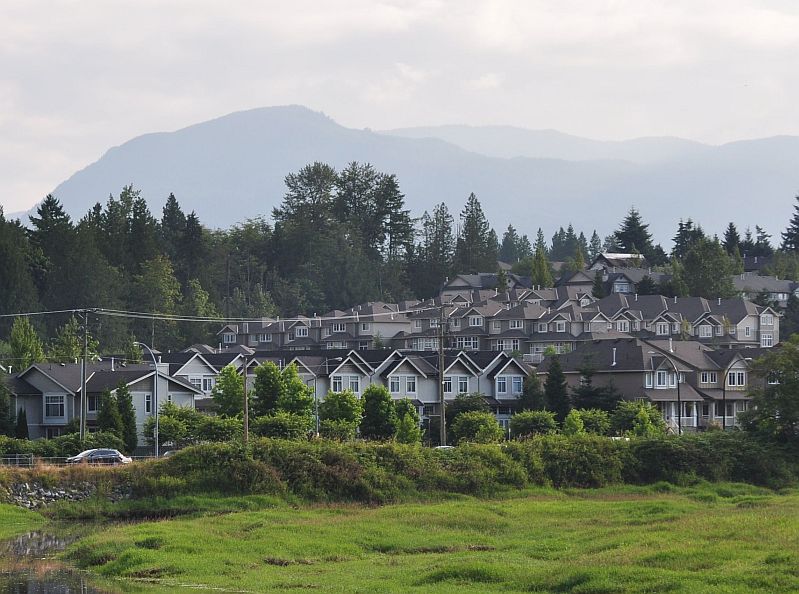
Affordable housing: a survey of 15 Metro Vancouver cities

In my February 9 post on measures for comparing B.C. communities,  I overlooked a 2011 report by Margaret Eberle and associates on affordable housing and housing diversity.

The report, submitted to the Metro Vancouver Housing Corporation,  measures the performance of 15 Metro Vancouver municipalities — the 15 largest — in implementing the 2007 regional housing strategy. Continue reading

Should we demand report cards on local government?

Local governments, we’re told, are close to the people and accountable to the taxpayer. Compared to what, exactly?  Of the 27 municipal governments in  Fraseropolis, which ones do best for their citizens at  earning public support for their programs, designing livable neighbourhoods, or investing for infrastructure  replacement?  Which ones do least?

In the United States, a consortium of organizations is developing a “sustainability index” that will allow communities to “benchmark their performance over time, or compare their results to those of other communities.”  It has taken two years of public process to develop the components of the Star Community Index; they include measures related to green infrastructure and green transportation as well as educational opportunity, housing affordability and arts and culture.  Local governments will enter this program voluntarily; a pilot run, with ten jurisdictions on board including King County (Seattle), is to begin in autumn 2012. Continue reading

Creating cycling routes for the cautious majority

In the years between 1995 and 2005, governments spent about $100 million creating pathways for cyclists in Metro Vancouver. Census figures show this spending failed to increase cycling’s share of work trips outside Vancouver City; cycling’s slice of the pie held to a near-invisible 1.0 per cent.

Even so, governments have continued to spend — on separated pathways, such as those around the new Golden Ears and Pitt River bridges, and on marked routes along city streets.  Metro Vancouver’s cycle route maps are becoming more and more elaborate.  Continue reading