Child poverty in Metro Vancouver

A detail from the 2014 Child Poverty Report Card. Areas of highest concentration (over 40 per cent) include a set of communities east of Vancouver's downtown, Squamish territory at the north end of the Lions Gate Bridge, and Metrotown in Burnaby.

A detail from the 2014 Child Poverty Report Card. Areas of highest concentration (over 40 per cent) include a set of communities east of Vancouver’s downtown, Squamish territory at the north end of the Lions Gate Bridge, and Metrotown in Burnaby.

Some Canadians are much healthier than others. Poor health outcomes are more likely among: children and families living in poverty; the working poor; the unemployed/underemployed; those with limited education and/or low literacy; Aboriginal and remote populations; newcomers; persons suffering from social exclusion; the homeless; and those who have difficulty securing affordable housing. — Final Report of the Senate Subcommittee on Population Health, 2009

In late 2014, the BC Child and Youth Advocacy Coalition issued a Child Poverty Report Card organized into 10 fact sheets, including a fact sheet on Metro Vancouver.

For this website, the takeaway is that poverty thrives in all parts of Metro Vancouver, though it may not show up at street level.  Besides the often-documented Downtown Eastside, there are zones where poverty is common in Richmond, Burnaby (including Edmonds, discussed in our February 2 post), Surrey, Langley — and in fact, in almost any urban centre. Continue reading
Metro Vancouver election results: build, baby, build

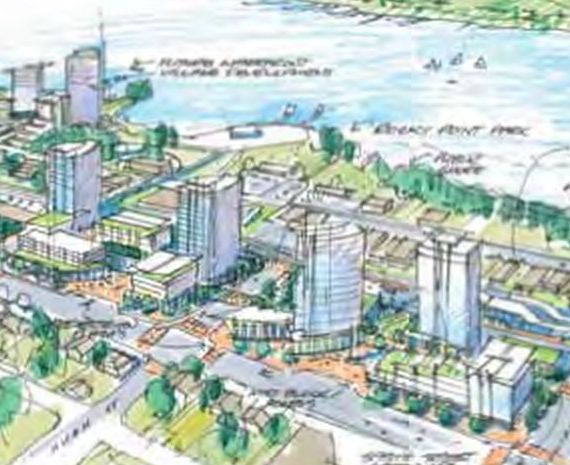
On November 15, voters in most of British Columbia voted for continuity in local government. Where there was change, it was generally more generational than ideological.  (And if there was no competition, such as for the mayor’s position in the District of North Vancouver, there was no voting at all.) In Metro Vancouver, continuity means further densification, often through tower development. For the most part, anti-development movements were turned back at the ballot box.

Port Moody Centre croppedLet’s start with the single partial exception. In Port Moody, city government had proposed a dramatic plan to densify the central area, responding to the anticipated opening of a new rapid transit line. An opposition movement bloomed, peaking in late 2013, vowing to protect Port Moody’s (fictitious, I think) “small-town feel.” I do not know what this means; Port Moody has allowed monster detached homes to run halfway up Heritage Mountain, and its manufactured urban villages are heavy with towers. In any case, the  opposition leader ran for mayor, and did okay, but he was defeated by incumbent mayor Mike Clay. The mayor lost some allies on council, and at least one newcomer has vowed to protect the “small-town feel.”. Both sides say they won. Clay says his central area plan, scaled down in 2014 to appease the critics, will be implemented. Over time. Continue reading

2014 property taxes in Metro Vancouver

Queensborough 2012 cropped

In a recent report on property taxes in Maple Ridge, the District of Maple Ridge municipal government has published a table showing municipal tax charges on the “average house” in cities across the Metro Vancouver region. The table is provided below, minus a few explanatory notes.

There are 21 municipalities in the region, and some of the smaller ones are not shown. Mission, which is adjacent to Maple Ridge, is not part of the Metro Vancouver region. Continue reading

A core review of Greater Vancouver’s parks

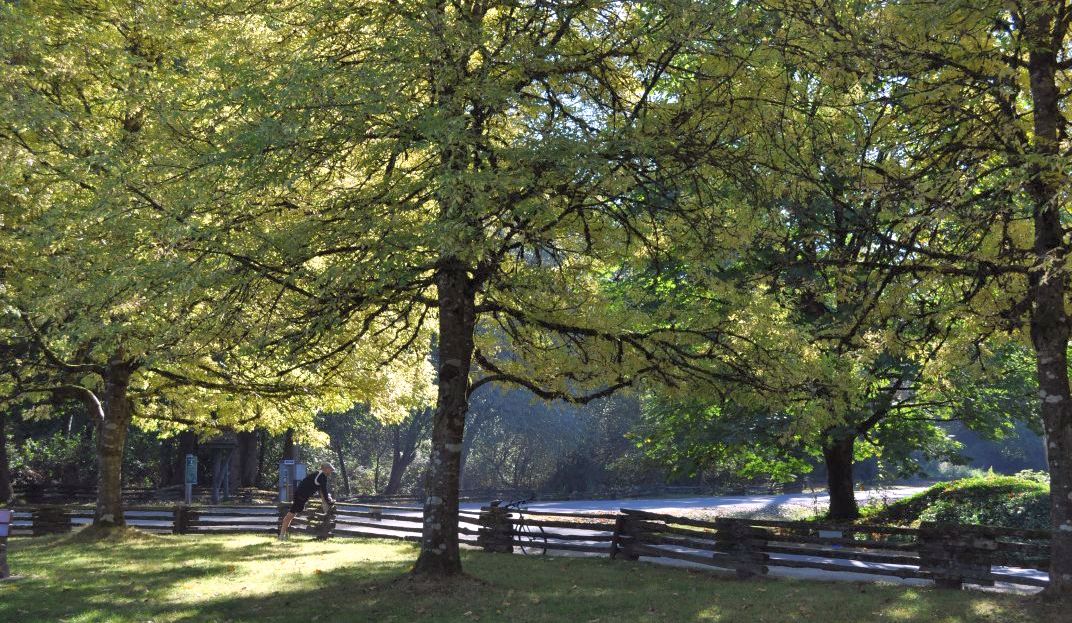
Derby Reach regional park, Langley

Derby Reach regional park, Langley

Greater Vancouver’s regional authority manages 138 square kilometres of parks and protected zones, an area 30 per cent bigger than the City of Paris. Staff put the number of park visits in 2012 at 10 million. The regional land inventory includes key sites across the region — Pacific Spirit (adjacent to UBC), Burnaby Lake, Lynn Headwaters,  Campbell Valley — as well as a growing number of cycling and pedestrian greenways.

Despite all this, the proposed restructuring or dismantling of the regional parks system has attracted little attention beyond a couple of news articles in April, 2013. As the Metro Vancouver Board launched a parks services review, reporter Jeff Nagel quoted  prominent mayors as suggesting that the region and municipalities are duplicating each other’s efforts. Continue reading