Demolition in a vintage rental neighbourhood

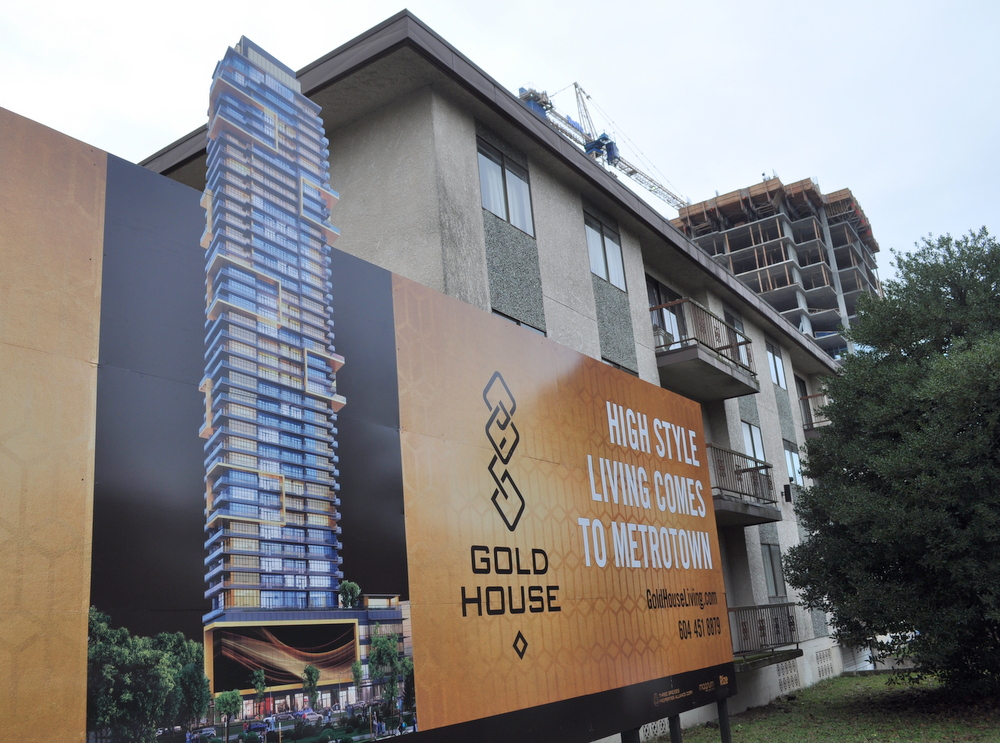
High Style Living

Five years after tower construction first jumped to the south side of the Skytrain line at Metrotown, the City of Burnaby continues to enable the destruction of 1950s and ’60s era rental housing in the area.

Rick McGowan, a neighbourhood activist and townhome owner, estimates that 560 rental units have been replaced by owner-occupied condo towers, or are slated for demolition. More worrying, he says, is the fact that there is no end in sight. Continue reading

An urban hub for Metro Vancouver’s northeast sector

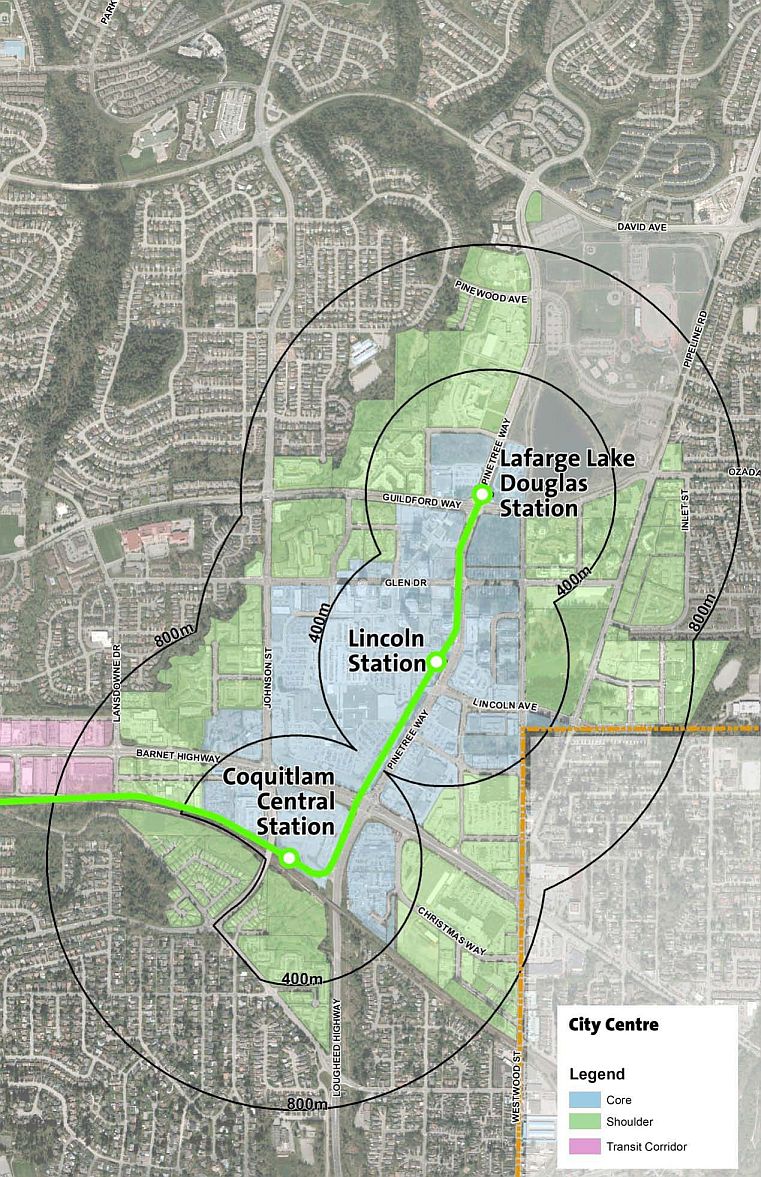
The Coquitlam urban core, from a 2013 municipal presentation. City Hall is upper left.

The Coquitlam urban core, from a 2013 municipal presentation. City Hall is the low-rise complex upper left. At least three new towers have joined this set within a 16-month period.

The streets behind the Coquitlam Centre mall feel like a pop-up city, construction dust still filtering down from unfinished towers.

Coquitlam transit-oriented areasThis is the core of a designated Coquitlam City Centre planning area, slated to double in population to more than 50,000 in the next two decades. The municipal government’s 2002 area plan sees the densified city centre as the future “arts, entertainment and cultural focal point for the Northeast Sector of the Metro Vancouver Region.” The northeast sector, by most definitions, stretches from Port Moody to Maple Ridge, and will house (hypothetically) half a million people by 2040. Continue reading

The freeway islands, Langley, British Columbia

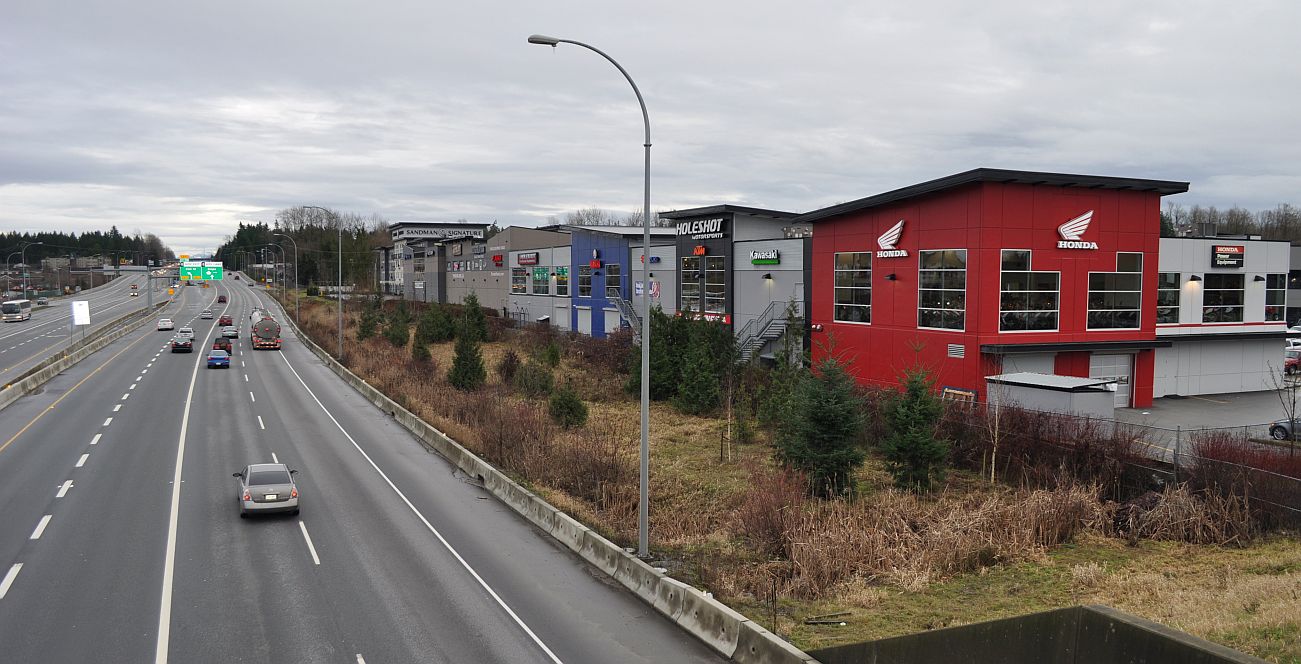
Commercial development, right, is surrounded by components of the 200th Street Interchange

Commercial development, right, is surrounded by components of the 200th Street Interchange

In 1999 or thereabouts, the British Columbia government and Langley Township agreed to locate commercial development within a new Highway 1 interchange at 200th Street, replacing a crumbling structure from the Diefenbaker era. Interchange traffic would be controlled by several sets of traffic signals, a departure from freer-flowing design traditions. Continue reading

Talking Population Forecasting Blues

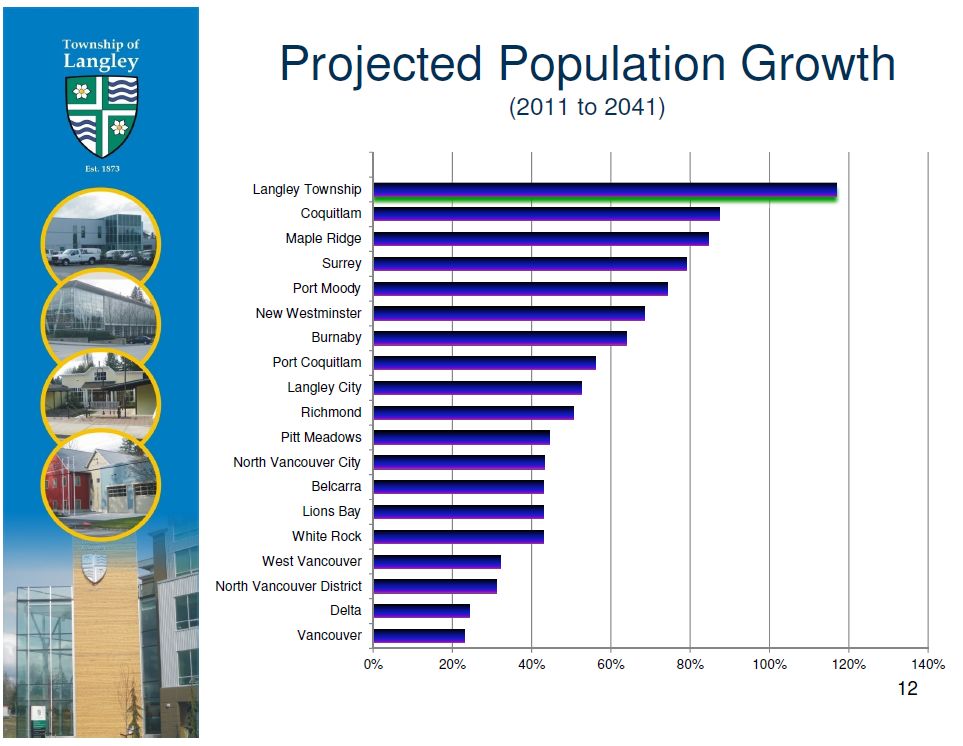
Population growth forecasts, Metro Vanouver, 2011-2014Our friend Morgan Jensen, a candidate for city council in Maple Ridge, recently shared a chart that lays out growth forecasts for municipalities in Metro Vancouver. It comes from a planning presentation at the Township of Langley.

The chart shows more than a doubling of population in the Township, putting roughly 225,000 people in that area in 2041. The City of Vancouver would acquire the same number of people as the Township, but grow much more slowly in percentage terms, reaching a population of 765,000. Surrey would become the region’s largest city, with about 880,000 people. Continue reading