Hoping for the best in the Heights

The Heights village in Burnaby grew up along a streetcar line that was built during the Canadian land boom and crash of 1911-1912.  Great history, and some great little shops, some dating from the Italian immigration of the 1940s and 50s.  I’m sure people have fond memories of this place; I feel regret in producing reasons why it doesn’t seem to work as well as it could.
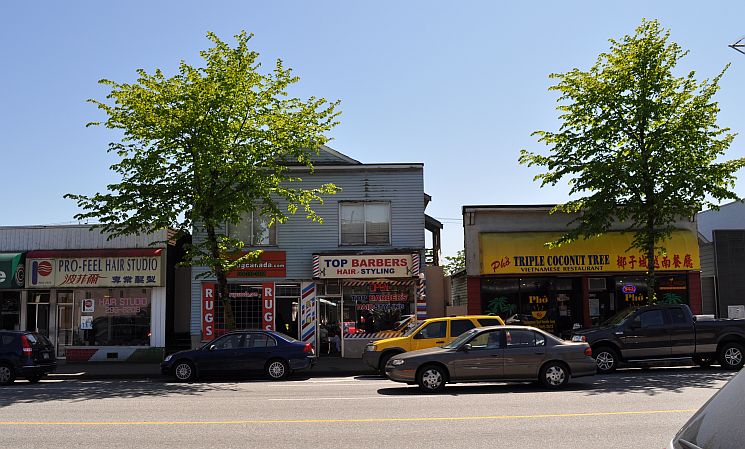
The nature of the building fronts is patchy, with a few moderately brutal 1970s and 1980s blocks. The City of Burnaby revised and strengthened  its plan for the section of Hastings Street between Boundary to Willingdon in 1992.  The village designation was extended four blocks to the east in 2008.  The key principle is to encourage mixed-use development on Hastings, with housing up and retail down.  But one street does not a village make; Albert Street, one block north, is part of the village plan, and it offers some housing choices, and there is a fine library and recreation centre close by, but otherwise the area streets seem frozen in single-family detached mode. Continue reading

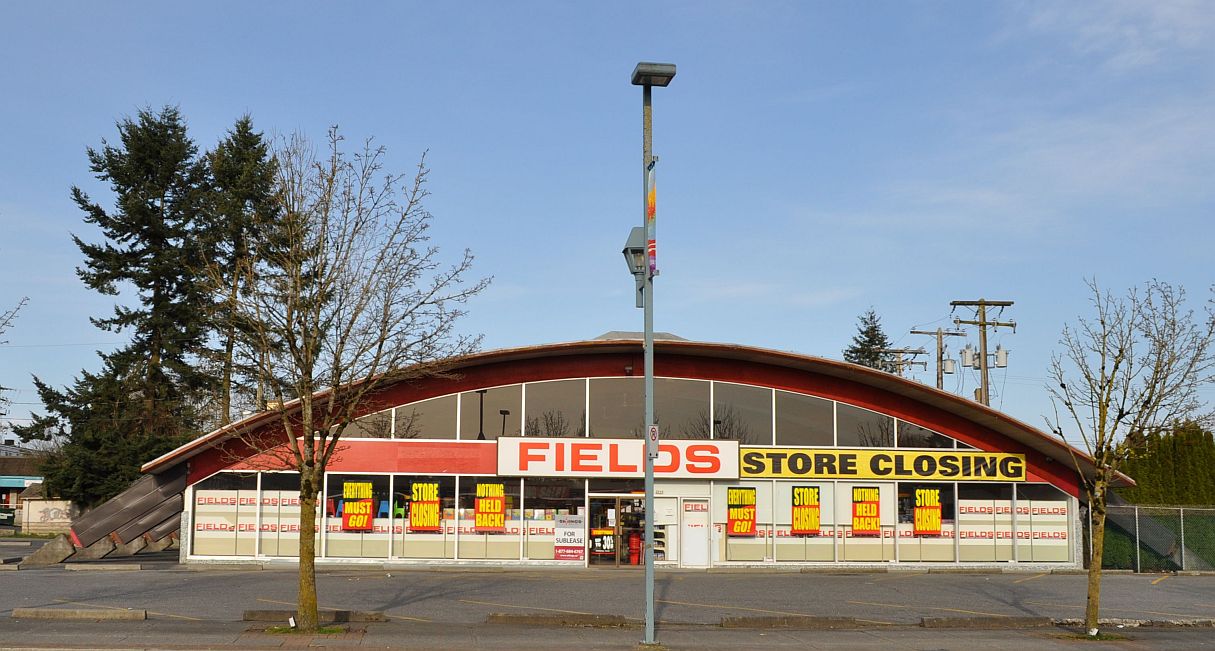
The subtle charms of downtown Maple Ridge

Metro Vancouver’s 1996 Livable Region Strategic Plan tagged the Maple Ridge Town  Centre as one of eight regional hot spots for commercial and employment growth, alongside Metrotown, central Coquitlam and downtown Richmond.

Local government invested $100 million in new civic buildings to fulfill the dream, but the private sector money never followed.  Even on a municipal scale, many residents  judge that the current retail opportunities in Maple Ridge are second-rate; they drive to Pitt Meadows, Langley or Port Coquitlam to shop. Continue reading

Aldergrove: Salvaging a village in the deep ‘burbs

In a Langley Township Council discussion about Aldergrove’s urban village, Councillor Charlie Fox expressed hope that the village might rise again to become the “heartbeat” of the area.  “Right now, it’s probably the deadbeat of Aldergrove,” he said.

Mr. Fox might have been referring uncharitably to the social agency shops and kitchens that indicate the presence of a low-income population; or he might have been talking about the village’s air of fatigue, of having seen repeated setbacks.  The village plan admits that nearby highway commercial development has drawn customers away, “as evidenced by a number of vacant store fronts and the existence of some marginal businesses.” Continue reading

Uptown: Density at the centre of Metro Van

Uptown New Westminster was built to function as a city centre, providing shopping and employment for the city of New West and adjacent pieces of Burnaby, but its success in that regard has been mixed.  It works better as an urban village for the thousands who live within walking distance.

Present-day Uptown dates from 1954, when a new Woodward’s Department Store opened on Sixth Avenue and began to suck the life from the old downtown on Columbia Street.  The New West Library followed, and diverse small retailers.  The commercial architecture is something like that of European towns that were bombed and rebuilt.  Functional, let’s call it.

My co-tourist in Uptown was my sister Ellen Heaney, who has worked at the library for 38 years.  We ate at the Belmont Bakery and Bistro, a good tea shop in the grandmotherly style.  The area is well set up for seniors, with transit, recreation, shops and cafes.  New Westminster has the highest concentration of rental dwellings in Metro Vancouver — 46 per cent of the housing stock [from the federal census, 2011), compared with about 25 per cent in neighbourhing Coquitlam, Richmond and Surrey. Continue reading