The working poor in Metro Vancouver

Walmart

The Canadian Centre for Policy Alternatives, a left-leaning research centre, has published a report on the incidence of poverty among working people in Metro Vancouver.

The 35-page study by CCPA economist Iglika Ivanovna has major flaws as an advocacy piece, but it delivers the useful reminder that “having a job is not a guaranteed path out of poverty.” Continue reading

The amalgamation of cities

"Implementing reclaimed material along the banks of the woonasquatucket river." Lifted from daftdetroit.wordpress.com

“Implementing reclaimed material along the banks of the woonasquatucket river.” Lifted from daftdetroit.wordpress.com

Some of the most critical problems in B.C. urban life can be linked to our multi-municipality system of regional government. The lack of a sustainable funding formula for public transit in Metro Vancouver, for example, can be blamed in part on years of dithering by mayors. Our local housing and homelessness policies are a mish-mash, with some municipalities clearly offloading social problems onto others.

In Ontario, a “common sense” provincial government took the drastic step of eliminating many mayors and councils in the late 1990s. The most populous region, Toronto, imploded from six cities into a single mega-city. In Ottawa, 11 municipalities merged into one. Across Ontario, 229 municipalities, or more than a quarter of the total, were wiped from the map to achieve cost savings and more efficient decision-making. Continue reading

Touring B.C.’s Southern Interior

Hedley

Hedley

A recent four-day trip through the South Okanagan, Central Kootenays and the Shuswap Valley reminded me of the benefits of slowing down. I would have liked to really get to know these landscapes and villages — what you see here are only glimpses. Thanks to co-tourist Dominic Kotarski for bringing his global perspective, and to the excellent Hume Hotel for a welcome in Nelson.

Many of these towns — Princeton, Hedley, Midway, Greenwood, Kaslo, New Denver — were at their peak in 1900 or before that, riding a boom in silver. Our guide at the volunteer-run historical centre at Sandon said the now-abandoned town was “the Fort McMurray of its age,” the place where young men came to make their fortune. Continue reading

Passionate about Esquimalt

Esquimalt House 1

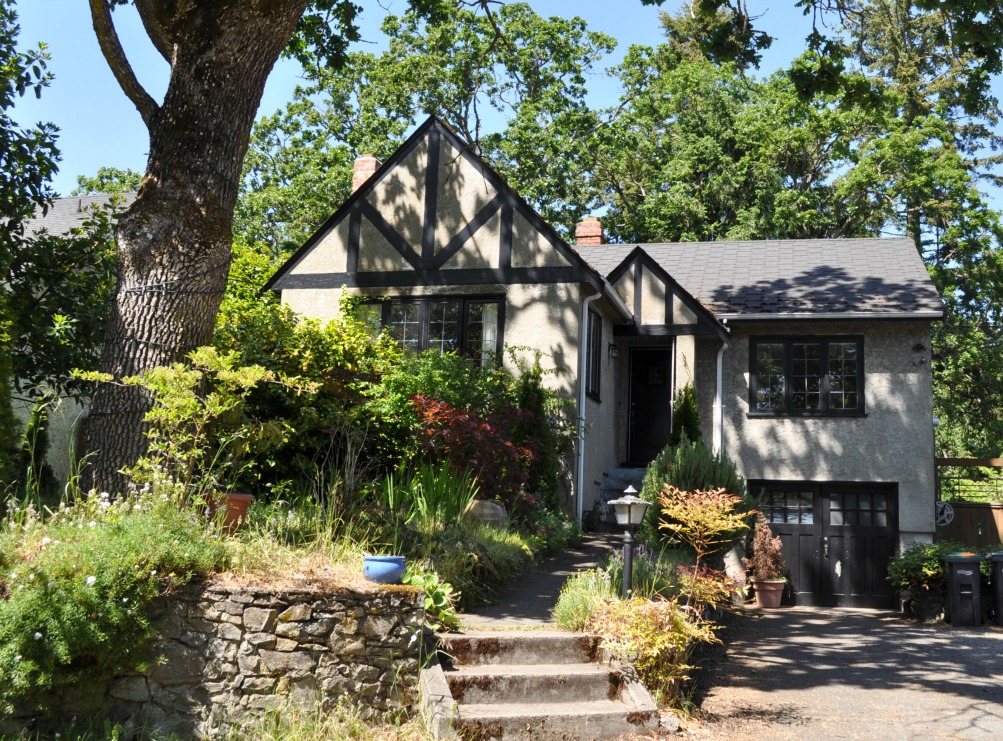
Fernhill Road, Esquimalt. Garry oak, a tree peculiar to southern Vancouver Island, grows all around this house. The garage-under-the-dining-room feature was popular on the West Coast from the 1910s into the 1940s, but many of these spaces are now used for storage.

Voters in Greater Victoria, population 345,000, are looking at the possible amalgamation of their 13 municipal governments into a smaller number. Possible, but not likely, since so many urban British Columbians are passionate about the randomly-sized cities and towns where they live. Rather than amalgamation, a slight increase in the number of “shared services” — a joint parks department here, a joint library there — is a safer bet.

Esqumalt condos

New apartments, Carlisle Avenue, Esquimalt

Esquimalt is one of the odd-shaped municipal bits that makes up Greater Victoria. Its Pacific shoreline is home to a naval base that employs 6,000 people. Otherwise, the city has waterfront parks, a modest urban village and an on-street bike lane connecting to the offices and retail stores in Victoria’s downtown. Continue reading