Gun battles and crime stats in Greater Vancouver

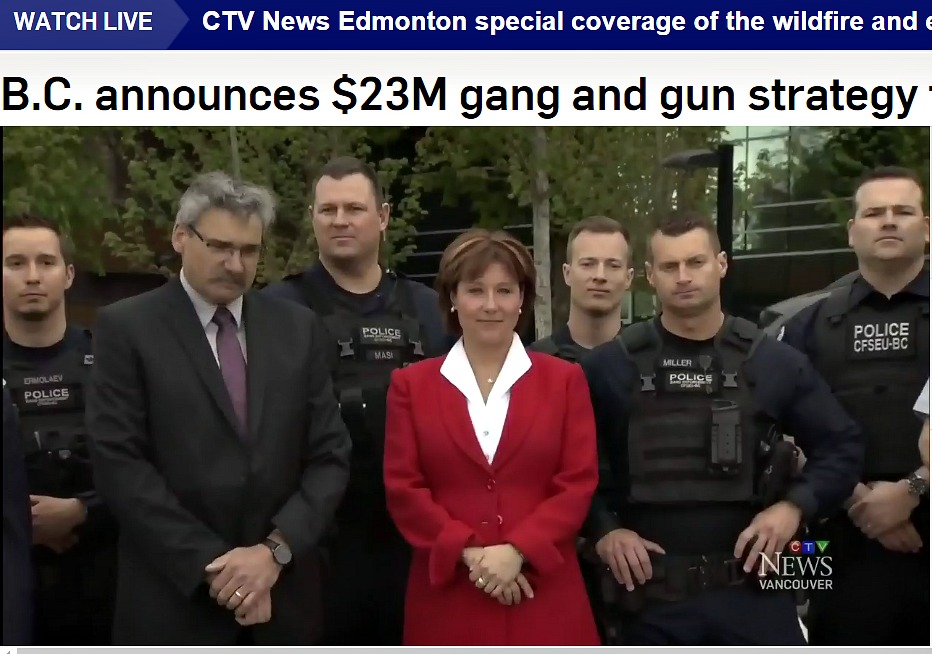
Premier Clark, centre, with B.C. Public Safety Minister Mike Morris and Surrey police

Premier Clark, centre, with B.C. Public Safety Minister Mike Morris and Surrey police

On April 15, 2016, Premier Christy Clark of British Columbia announced a $23 million dollar boost to its “Guns and Gangs” strategy in response to the “frequency and public nature of recent gang shootings.”

The money is to go wherever it’s needed, but the first-named community in the government announcement and the TV reports was Surrey. Periodic violence in Surrey has overshadowed other news from B.C.’s second-largest city at least since the 2014 local election campaign. On April 18, CTV News published an interactive map showing the locations of 33 shootings in Surrey since New Year’s Day, 2016. Continue reading

The Newton town centre

72nd Avenue near the site of the historic Newton farm

72 Avenue near the site of the historic Newton farm (established 1886, now vanished)

As it turns out, there’s an urban village at the Newton Town Centre in Surrey, British Columbia. Finding it requires selective vision, looking past monster roadways, big box stores and industrial yards; but in its lopsided way, the village offers housing choices, commercial services, transit, and walking trails, straddling the former main highway between Vancouver and the USA.

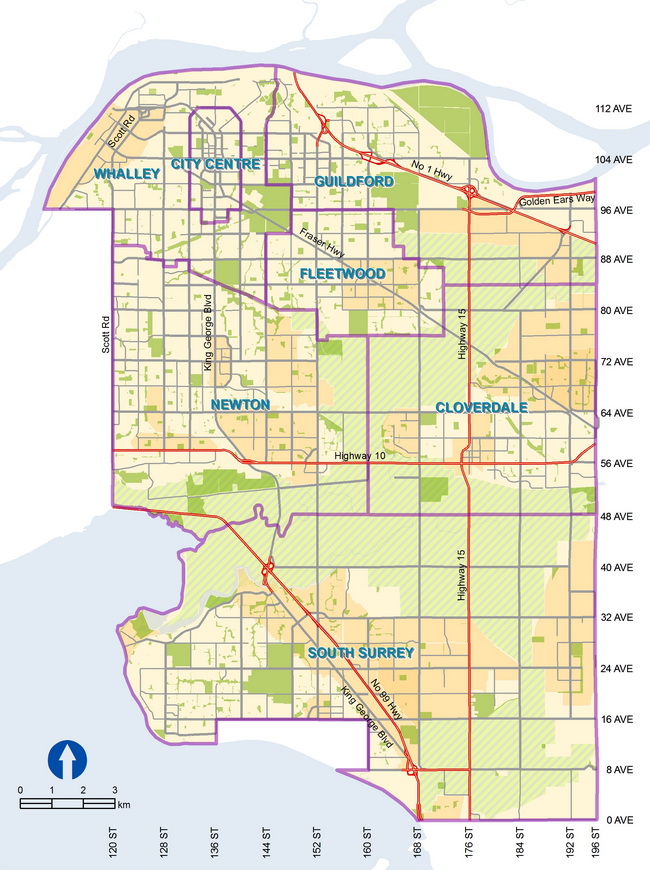
Areas of Surrey, from the official community plan section of the City website

Areas of Surrey, from the official community plan section of the City website

Newton is one of seven planning areas in the vast city of Surrey. The municipality covers 316 square kilometres, an area as big as Vancouver, Burnaby and Richmond combined — or four times the size of the island of Manhattan, if that’s clearer. Google Maps estimates that it might take you three hours time to cross Newton diagonally on foot. Newton is too big to be a neighbourhood — a borough, perhaps — but there are broad demographic tendencies. Surrey’s fact sheet on languages reports that Punjabi is the most common mother tongue in Newton, ahead of English; in the Cloverdale area to the east, the English-to-Punjabi ratio is 10 to 1. Continue reading

Mr. Pachal goes to City Hall

Langley City Hall March 2016

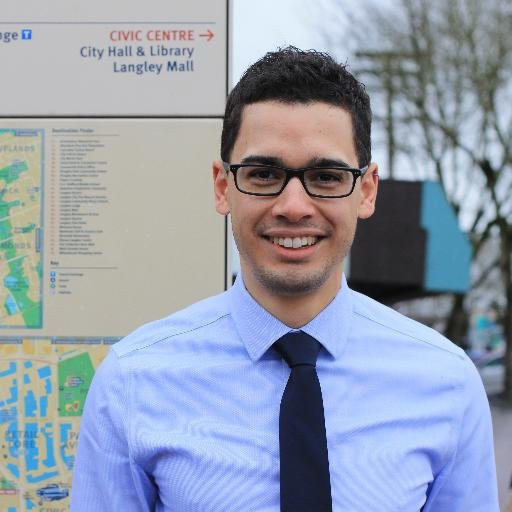
I drove to Langley City Hall a couple of weeks ago to watch our friend Nathan Pachal take his oath as the newest member of City Council. He collected just over 35 per cent of the vote in a local by-election; in a race with nine candidates this was good enough for a win.

NathanNathan is a student of urban issues, a dedicated transit user and the editor at the South Fraser Blog. Langley City is a densifying municipality of 25,000 people bordered on the south, north and east by the sprawling Langley Township and on the west by the massive City of Surrey. A 2014 community profile sets out the hope that Langley City will become the commercial and artistic hub for a suburban market area of 250,000 people. Continue reading

Vancouver home prices: don’t expect a government counter-attack

Edgemont, District of North Vancouver

Edgemont, District of North Vancouver

[This speculative piece was clearly off base. Three months after it was published, the Government of B.C. introduced a 15 per cent tax on foreign real estate investment within Metro Vancouver in an effort to cool the housing market.]

The current monthly report on Greater Vancouver real estate shows the benchmark price for detached homes in the west of the City of Vancouver crossing the $3,000,000 threshold. This is in an urban region where Statistics Canada reported the median household income as $73,390 in 2013.

Until recently, governments downplayed the significance of runaway home prices. The problem appeared to be mostly confined to detached homes in a few upscale enclaves. This has changed, with detached homes in a growing number of neighbourhoods crossing the $1,000,000 mark — in Burnaby East, for example, an area that mixes modest and middling properties. Apartment prices are rising sharply in Vancouver and Burnaby after years of slow or no increase.

Analysts and news media have identified the main driver as safe-haven investment from foreign sources, especially China — drawn by a liveable Chinese-speaking city, a cheap Canadian dollar, low interest rates and an open real estate market.  The British Columbia government has not confirmed this proposition, but it has started to gather data on the citizenship of property buyers, for what that’s worth. The provincial opposition leader has recently suggested that money-laundering is part of the foreign investment equation. Continue reading