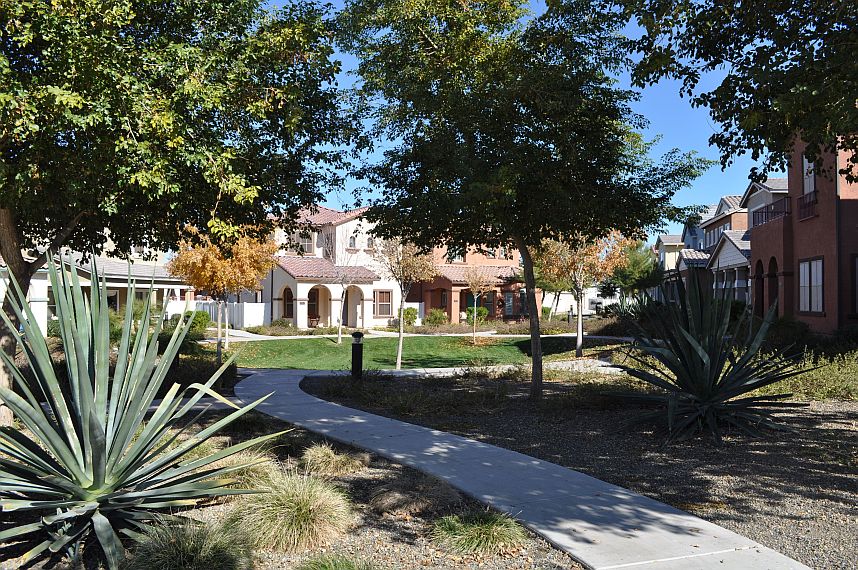
Creating cycling routes for the cautious majority

In the years between 1995 and 2005, governments spent about $100 million creating pathways for cyclists in Metro Vancouver. Census figures show this spending failed to increase cycling’s share of work trips outside Vancouver City; cycling’s slice of the pie held to a near-invisible 1.0 per cent.

Even so, governments have continued to spend — on separated pathways, such as those around the new Golden Ears and Pitt River bridges, and on marked routes along city streets.  Metro Vancouver’s cycle route maps are becoming more and more elaborate.  Continue reading
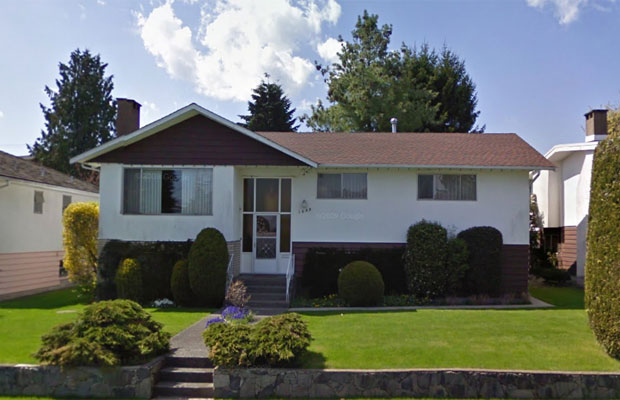
Marijuana grow-ops and their neighbours

At the Liberal Party of Canada’s  national policy convention last weekend, 77 per cent of delegates voted in favour of a youth wing resolution to legalize marijuana.  In part, the vote reflects frustration  that our expensive yet half-hearted efforts at prohibition leave  communities exposed to  unreasonable risk.

Despite ongoing efforts to identify and shut them down, we had an estimated 18,000  illegal indoor marijuana grow operations in summer 2011 in British Columbia alone [Globe and Mail real estate section link, now deleted].  In other words, about one in every 120 dwellings shelters a grow-op.  A 2004 publication for Canadian realtors lists the costs for the wider community: a heightened risk of structural fires, chemical spills, increased violent crime and property crime, and the signficant theft of electric power, which BC Hydro values at $100 million per year in this province.  This is aside from the costs imposed on individuals when they unwittingly purchase a former grow-op.  Continue reading

Rapid transit and politics in Republican Arizona

Arizona has a reputation as one of the most conservative states in the star-spangled republic.  However, the three-year-old Light Rail system in Metro Phoenix points out the persistent diversity on the Arizona political scene.

Light rail runs from the edge of Mesa into central Phoenix, serving university campuses, the international airport, and the Phoenix cultural, entertainment and financial districts.  As of early 2012, it also ran through the heart of Democrat Metro Phoenix, crossing four of the five Phoenix-area electoral districts that were dominated by Democrats in the state House of Representatives — districts that provide close to half the Democrat strength in the state House.  One would almost conclude that Democrats (disproportionately Latinos, blacks, gays and young people) are drawn to transit-friendly areas.  [November 27, 2012: New maps, new state legislature.  The train crosses still crosses four state electoral districts, but the Democrats now hold five of the eight seats within the new boundaries.]  Continue reading

Agritopia

Suburban Phoenix, in the Sonoran desert, shows a repetitive development pattern: clusters of townhomes or detached homes, each cluster architecturally uniform, often walled or gated, strung out along wide, straight arterial streets.  Many through streets are generously planted with a variety of desert trees, but they’re motor vehicle routes all the same; the opportunity to escape into a pathway or laneway is rare, and many of the quieter side streets end in cul-de-sacs.

In the 1990s a landowning family in the municipality of Gilbert decided to try something slightly different: a development of diverse housing types and workplaces arranged around a small organic farm and a Christian school.  They boldly named it “Agritopia.” The 450 homes are now completed and occupied, and the farm produces food for the family-owned diner that attracts customers from across the region, and for other nearby cafes and markets. Continue reading