Petitioning Ottawa for a break on rental housing

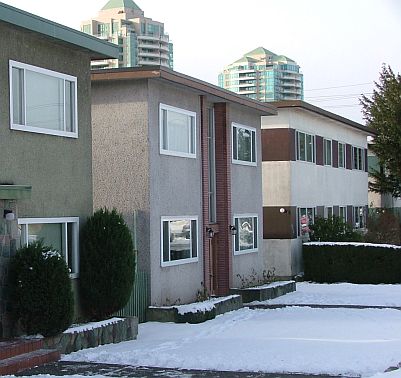
The latest report from Canada Mortgage and Housing Corporation shows that average rents in Metro Vancouver are the highest in Canada, at $1,237 for a two-bedroom suite in a 1990s apartment building.  Vacancy rates in autumn 2011 were low and declining on the west side of the region — 1.2 per cent in Richmond, 0.7 per cent in the City of Vancouver and 0.4 per cent in the District of North Van.

The Metro Vancouver regional authority has warned for somet time that a critical shortage of affordable rental space is  hurting families and contributing to homelessness.  In the 2006 census, 55 per cent of homes in the City of Vancouver were rental properties, and more than 40 per cent in Burnaby, New West and  North Van City.  There’s demand for more units, but they’re not getting built.   Continue reading
The suburban high street at risk: a Fraseropolis example

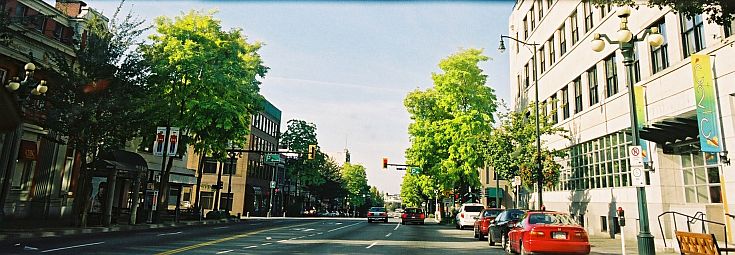
The modern history of Canadian cities can be written partly as a struggle between the pre-1939 shopping street — or high street, as they say in the UK — and the automobile-oriented shopping centre.

The high street has seen repeated setbacks, with the creation of full-service shopping centres in the early 1960s, the covered mall a few years later, and the big box more recently.  In most cases, the shopping centre offers the retailer a reduced level of risk in terms of customer traffic levels, security, building maintenance and flexibility for expansion or contraction.  For the shopper, the shopping centre often promises lower prices and an escape from the weather.

In fact, the high street has become something of a niche phenomenon — patronized by the carless, by friends and supporters of individual merchants, or by odd ducks who like to walk and browse but not necessarily buy.  Continue reading

Development at Albion Flats – the background

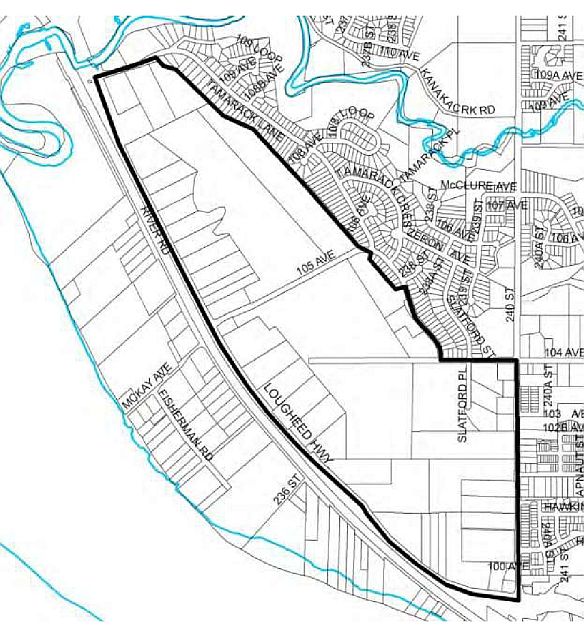
The laws protecting B.C.’s agricultural land have been controversial ever since they were enacted in the 1970s.  Recently, the Agricultural Land Commission rejected a proposal by the District of Maple Ridge, a part of Metro Vancouver, to open more than 250 acres of the Agricultural Land Reserve for development, but the ALC has left the door open for a less ambitious plan.  The ALC’s position, communicated by letter, was  announced at the final Maple Ridge District Council meeting of the year on December 5.

The proposed construction of big box retail on the Albion Flats has been controversial in Maple Ridge.  The “pro-shopping” side was the clear winner in the November 19 municipal election; all of the Council candidates elected had been endorsed by interest groups that supported retail development on the Flats.  For the Fraseropolis region, it’s another example of a continuing suburban sentiment in favour of the hopscotch-style, automobile-dependent development that has dominated Port Coquitlam, Abbotsford and other municipalities in recent years.  Continue reading

Live-work spaces: why so few?

Millions of people in North American cities have home-based businesses, but we’re restricted from using our homes as production, distribution or employment centres, and in most cases, we’re even forbidden to put up a sign.

The “Tin Town” district in the city of Courtenay, B.C., on Vancouver Island, is an exception to this rule. I recently attended a social gathering in a solid, well-appointed upstairs apartment on Rosewall Crescent, in an area zoned “Industrial” on Courtenay’s land use map.  Nearby, one can find the Freakin’ Coffee Shop, the All in One Party Shop, the Sirius Beauty Dog Spa, the Soap Exchange Refill Centre, Klitsa Signs, Stand Up Paddle Boarding, Gemini Dance Studios, a marriage counsellor, and a handul of art and design studios that may dabble in sculpture and metal work.  In several cases, people live in the same aluminum-clad unit where they do business, or in an adjacent unit. Continue reading