The plan to grow Richmond Brighouse

Saba Road, Richmond

Saba Road, Richmond

We visited Richmond to see the Brighouse district, tagged by local government as an emerging urban village. We parked on the mall roof, an unvillagey place to start. After a walkabout of the area, our friend Bob Smarz decided that this is a real neighbourhood,  judging from the vitality of the Asian shops and the Public Market. I am undecided.

Richmond Centre mall

Richmond Centre mall

In its 2011 census, StatsCan put Richmond’s population at 190,000, with more than 40 per cent of residents speaking a language other than English at home.  Richmond city officials want to focus future population growth in the central area (see page 2-3 of the 2009 Central Area Plan), mostly in six designated urban villages. As I said in my previous post, I find the “village” vision difficult to grasp: the same six precincts would see significant growth in commercial, industrial and public-sector employment, and would also provide cultural and entertainment services on a regional scale. Continue reading
A wider definition of “urban village”

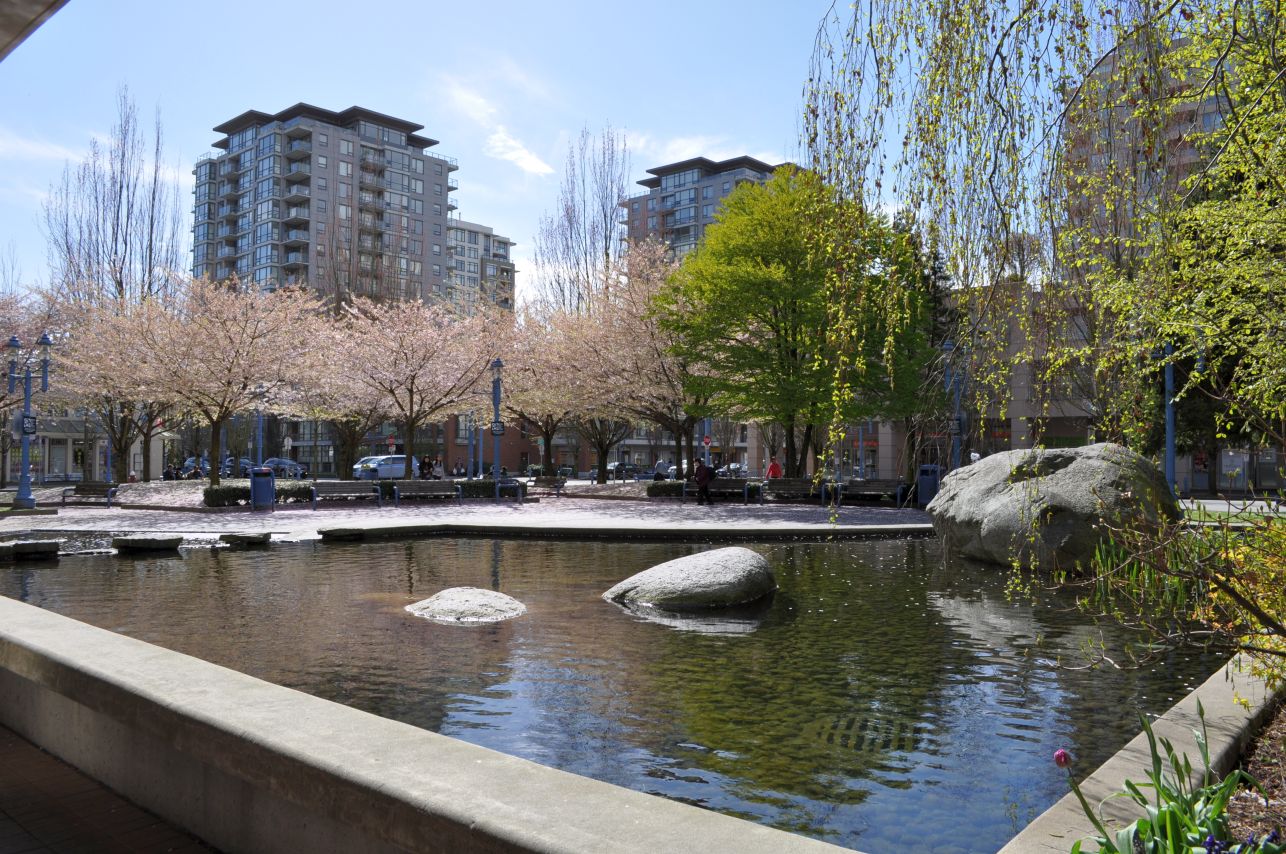
Behind the Public Market, Brighouse Village, Richmond City Centre

Behind the Public Market, Brighouse Village, Richmond City Centre

We launched the Fraseropolis Urban Villages project in March 2012, six months after opening this site. Our amateur definition of “urban village” focuses on places where residents can find everyday services, transit and housing choice within easy walking distance. Not everyone wants to live in a village; but a successful village attracts enough people that business and community life flourish.

Richmond City Centre

Richmond City Centre

The City of Richmond, British Columbia, in its 2009 whopper of a City Centre Area Plan, looks at the urban village in an expanded way. The Plan describes villages as a key part of the City’s City Centre development strategy, and identifies six of them. (“Candidate villages” might be a better name, since most of them exist only on the drawing board.) The Plan says that “‘Urban village’ is another name for the type of compact, walkable, transit-centred community encouraged by Transit-Oriented Development.”  Page 1-10 lays out a grid of required or encouraged village features. Continue reading

Time to plant onions

Garlic tops, Pitt Meadows, March 30, 2013

Garlic tops, Pitt Meadows, March 30, 2013

The West Coast has warmer winters than the rest of Canada, and a relatively long growing season. The Lower Mainland, as I’ve mentioned before, generates two-thirds of the agricultural value in British Columbia.

Metro Vancouver, the more urbanized half of Fraseropolis, has the biggest area of any B.C. county devoted to potatoes, beans, lettuce, Chinese cabbage, beets, carrots, spinach, rutabaga/turnips, pumpkins, shallots and green onions, blueberries and cranberries. Continue reading

West Broadway village: genteel densification

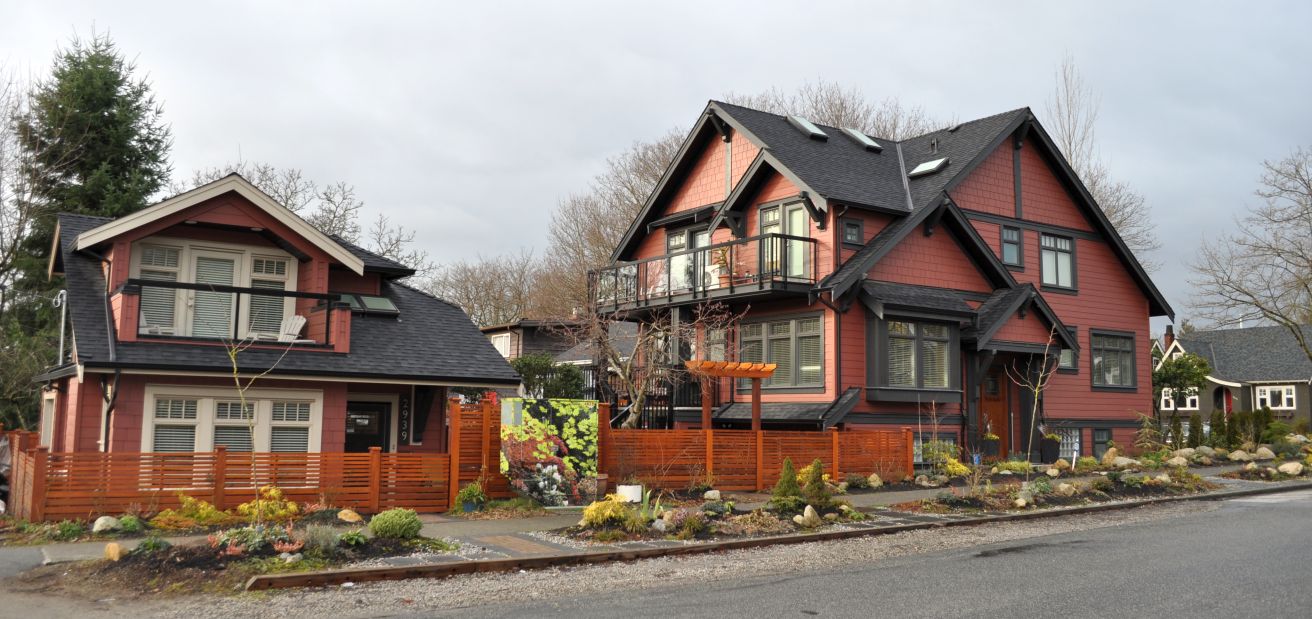
Coach house, Trafalgar Street, Vancouver

Coach house, Trafalgar Street, Vancouver

For decades, the City of Vancouver has pursued a strategy of creating new, densely-populated residential zones around unused industrial lands. (Yaletown is a good example.) Efforts to densify residential zones have generally been more cautious. When Council goes for the gusto, as with the multi-tower proposal for Kingsway and Knight, public opposition is often bitter.

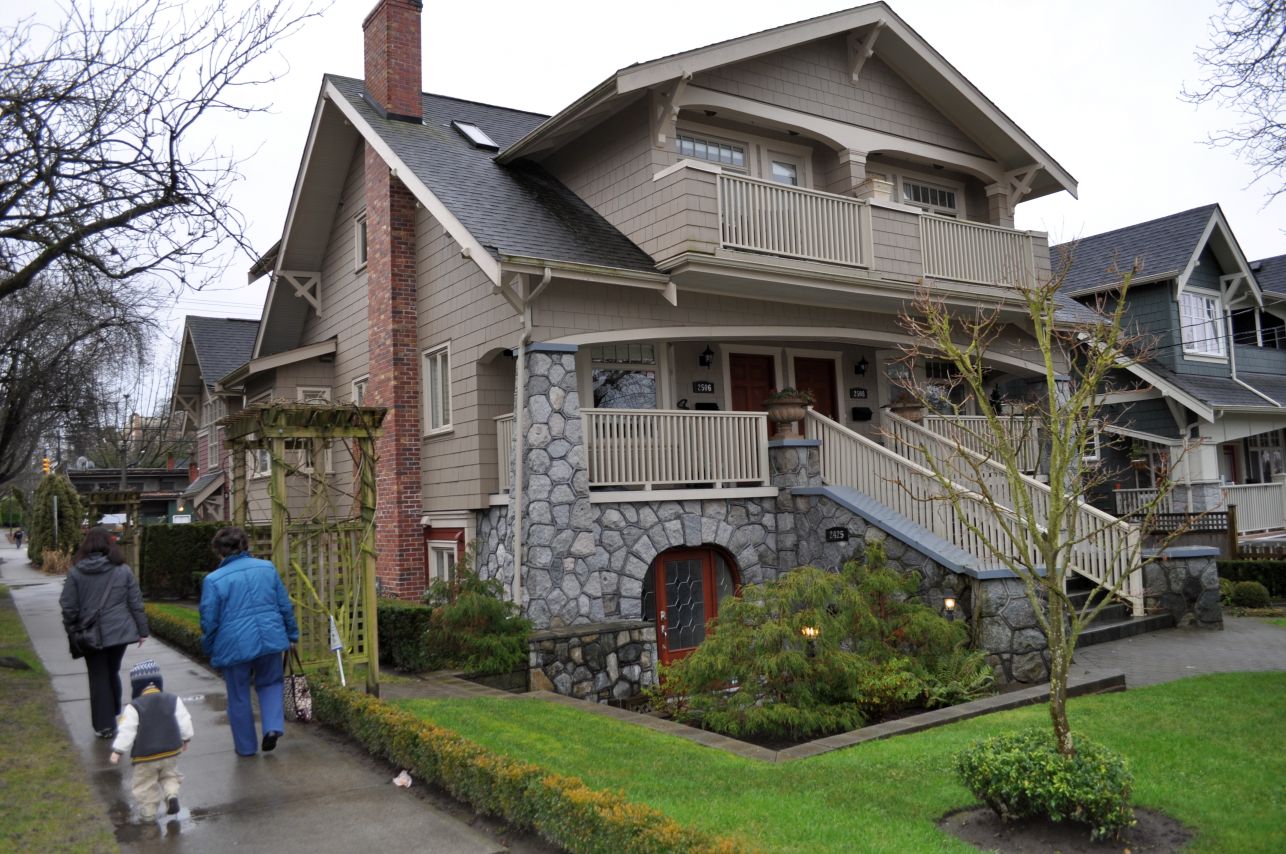
Larch Street: two units accessible from the main floor, one from the ground floor.

Larch Street: two units accessible from the main floor, one from the ground floor.

Vancouver’s West Broadway area is an example of creeping densification, an approach  designed to improve housing choice without triggering civil war. It’s achieved mostly by placing new mini-homes on large properties (as shown above), or by dividing vintage homes into multiple units (as on the left.) Continue reading