Tri-Cities towers: built on promises

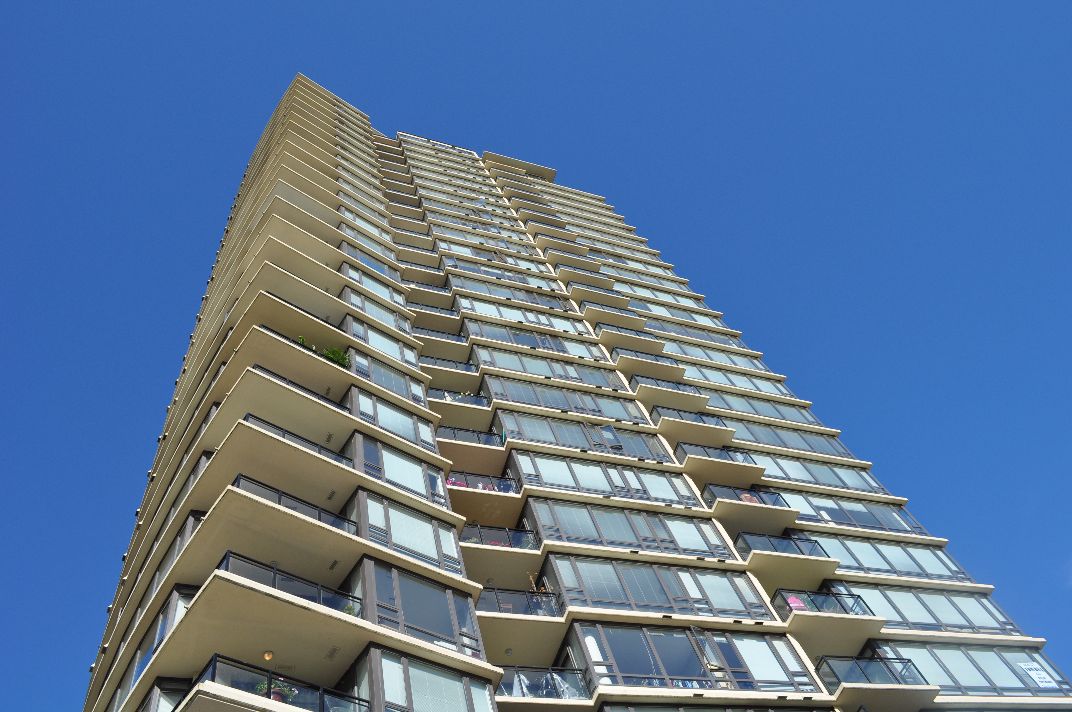
Of all the Metro Vancouver suburbs, Port Moody has worked most diligently in the past 15 years to manufacture city-like environments, based on the expectation that rapid transit was coming soon.  Thousands of people are waiting for that first train.

NewPort Village, a pedestrian-oriented ring of retail shops and condos protected from through traffic (some might call it “Whistler-style development”) opened about 1997.  It’s been almost freakishly successful, attracting a cluster of residential towers.

More recently, development jumped to the west side of Ioco Road, where a kind of mini-Yaletown has sprouted up.  In 2009, however, Mayor Joe Trasolini imposed a moratorium on high-density development in Port Moody.  “The population in the last 15 years has doubled . . . we’re being criticized for growing too much without infrastructure in place.” Continue reading

The working river

Port Metro Vancouver’s 2008 Economic Impact Study suggested that goods movement on the Lower Fraser River contributed about a billion dollars each year to the provincial GDP at that time.  Activity in Surrey alone was valued a $440 million.  Over the years, there have been numerous proposals to expand river transportation as an alternative to rail and trucking.

Most of the current shipping activity takes place between the Port Mann Bridge and the ocean, but even at the eastern edge of Metro Vancouver we see and hear frequent tugboats hauling logs, sand and gravel, or odd cargoes such as uprooted houses. Continue reading

Should Metro taxpayers pay for Vancouver streetcars?

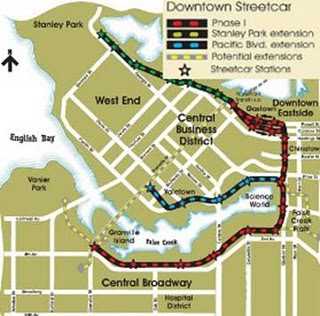
The proposed downtown Vancouver streetcar network

A streetcar plan recently revived by City of Vancouver mayoralty candidate Suzanne Anton is definitely kool.  Anton’s September 21, 2011 announcement is based on a 2005 consultant’s report putting the capital cost of a Granville-Island-to-Waterfront streetcar line at $100 million (in 2005 dollars.)  Annual operating costs are estimated at $3.6 million, with a ridership on the order of 5 million people per year by 2021.

Anton’s funding strategy, vaguely outlined, would see the City joined with private partners to fund the line.  Vision Vancouver Geoff Meggs responded that the streetcar system is not a priority; but if it is to be funded, it should be paid for by taxpayers across Metro Vancouver through TransLink.

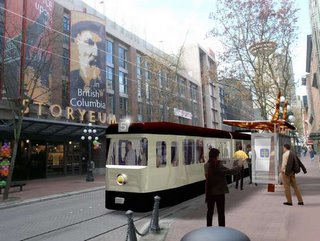
A rendering of the future streetcar in Gastown.

A weekend streetcar service ran on part of this line until 2009, staffed by volunteers and making use of antique cars.  I lived a hundred metres from the track and enjoyed riding to Granville Island on Saturday afternoon.  The new service would be more modern and attractive, but to a large extent it would fulfill the same touristic and local lifestyle function as the old line.  I would love to see a modern streetcar in operation, but it is not an essential component for the regional transportation system.

TransLink: fuel taxes and revenue

As noted in my September 15 post, Metro Vancouver’s transportation authority is looking for ways to scare up an additional $70 million per year for service expansion.

In the current proposal, a 2 cent lift in the regional fuel tax is supposed to cover $40 million of this.  But in a presentation in Maple Ridge, TransLink CEO Ian Jarvis cautioned that the motor fuel tax may not be the reliable cash cow it used to be; and in the foreseeable future, fuel tax revenues may drop.   Continue reading