A climate forecast for Metro Vancouver

crescent-beach-2-reducedThe Greater Vancouver regional authority has published a “Climate Projections” document that predicts a rise of 3 degrees Celsius in the local average temperature by the 2050s, within the working lifetime of people now in their twenties.

Mountainside reservoir; photo from

Mountainside reservoir; photo from “Climate Projections for Metro Vancouver”

Among other impacts, we can look forward to:

  • Reduced snowpack on the coastal mountains, hotter and drier summers, and lower summertime water levels in local reservoirs.
  • More very hot days and tropical nights, with demand for energy to run refrigerators and air conditioners forecast to increase to 6 times the current requirement.
  • A 45% increase in “growing degree days,” a measure of the warmth that grows crops.
  • Tough times for winter recreation operators.

Continue reading

A conversation about short-term rentals

apartment-detail-reduced

A hypothetical example:

A young working couple struggles to pay the mortgage on a high-priced Vancouver-area home. They build a basement apartment, to code. They find a tenant and declare their rental income to Canada Revenue. The tenant causes trouble, and the B.C. Rental Tenancy Act makes the eviction slow and stressful.

Vacancy rates in Metro Vancouver, fall 2015. This map was not provided

Vacancy rates in Metro Vancouver, fall 2015 (CMHC) with irrelevant census code numbers. This map was  not shown in the fall 2016 report but the numbers were almost unchanged.

So they think: why not rent our apartment to tourists or business people online, through Airbnb? We’d probably make more money, and the agency will pay for any damages if there’s trouble. Continue reading

Steveston village: this ain’t Manhattan

boardwalk-2

The neighbourhood business association promotes Steveston as a place to visit, with its waterfront, cafes and gift shops. Co-tourist Robert Smarz and I walked the  ocean-facing pathway on the west side of the community and enjoyed lunch at the Shady Island pub on the boardwalk; we didn’t have time to stop at the Georgia Cannery National Historic Site, so there’s more to see.

development-reducedBut the designated core is attracting new residents as well as visitors, part of a general upscaling of Vancouver-area real estate. Postwar bungalows on the back streets are disappearing in favour of low-rise apartment buildings of three and four storeys. There are now enough essential services in place — such as food markets and professional offices — to make this a livable urban village with an affluent tinge. Rapid transit to downtown Vancouver is about 20 minutes away by bus, and bus service is frequent. Continue reading

The Evergreen Line and tower development

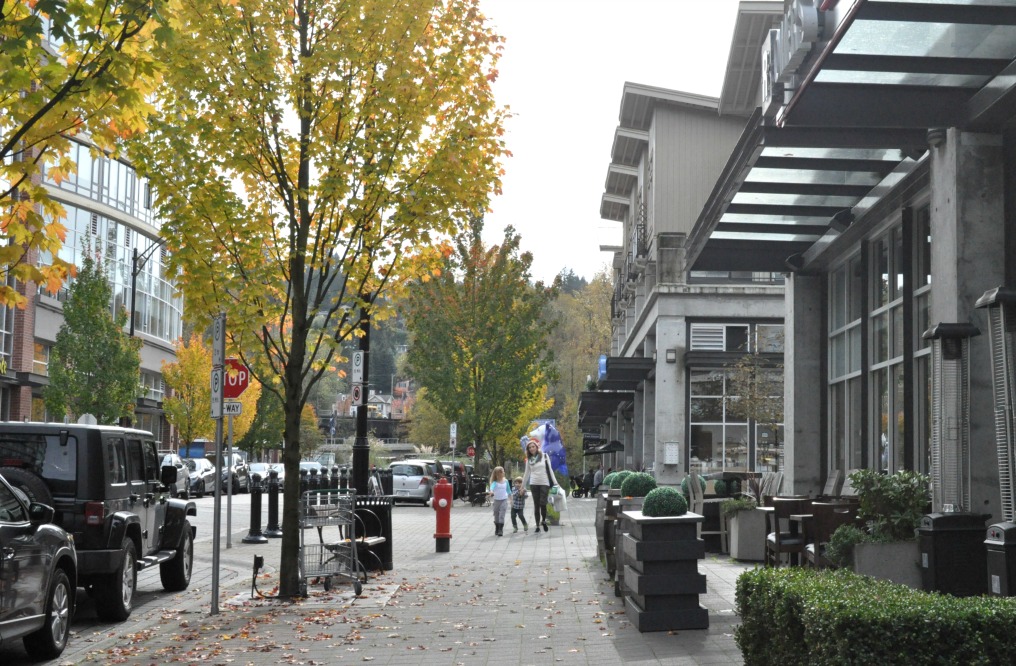
Skytrain-oriented development at Suter Brook, Port Moody, October 2016

SkyTrain-oriented development at Suter Brook, Port Moody, October 2016

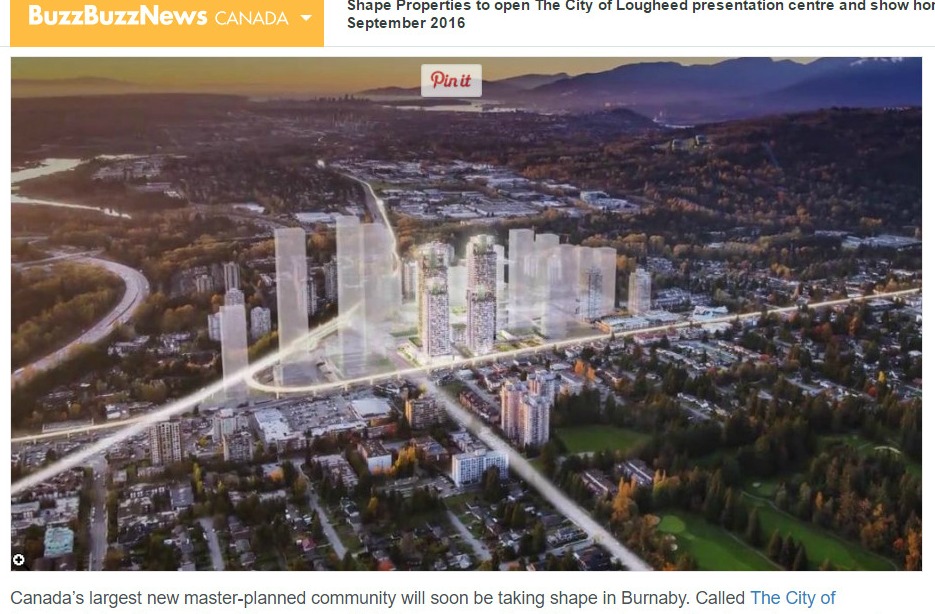
A developer's rendering of the

Burnaby’s “City of Lougheed” project, captured from a real estate site. The Evergreen Line enters from the right to join the existing Millennium Line.

Metro Vancouver’s Evergreen rapid transit line is set to open before the end of 2016. Planning for this SkyTrain link to deep Coquitlam started almost 20 years ago, and residential towers sprang up almost immediately near the proposed route, beginning with Newport and Suter Brook in Port Moody. The Coquitlam Centre precinct was rapidly densified and complexified through the 2000s. We recently saw the astonishing announcement of a 23-tower project at Lougheed Town Centre site in Burnaby, rising to heights of 65 storeys, with a potential for 11,000 apartment units. And it ain’t over yet. Continue reading