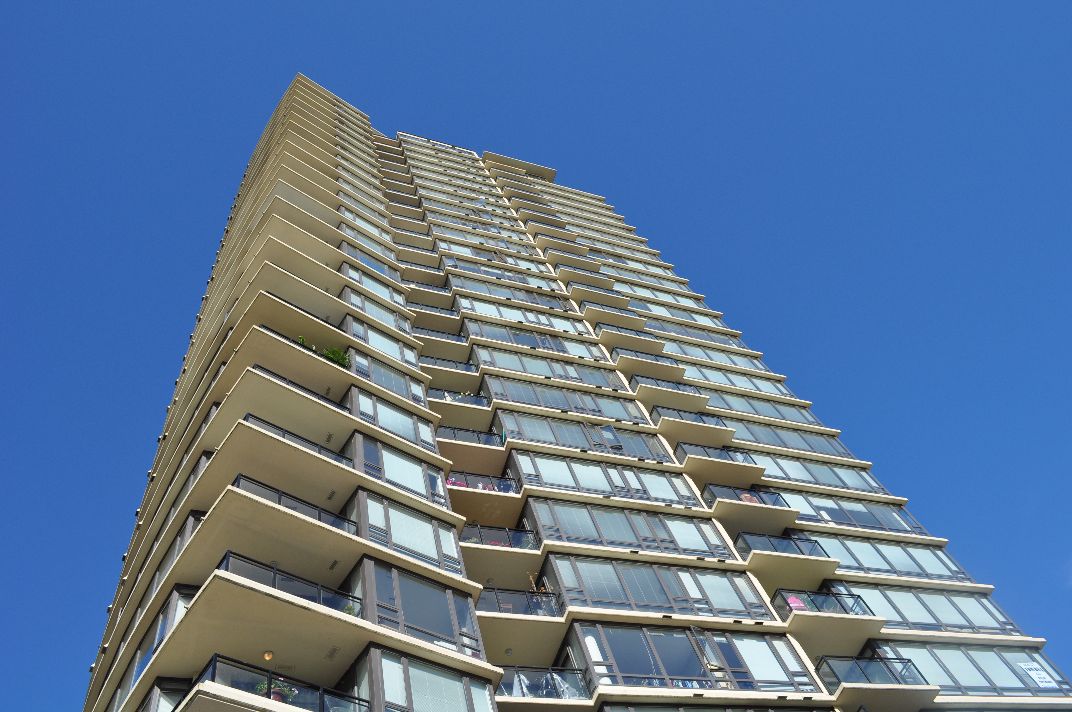
Tri-Cities towers: built on promises

Of all the Metro Vancouver suburbs, Port Moody has worked most diligently in the past 15 years to manufacture city-like environments, based on the expectation that rapid transit was coming soon.  Thousands of people are waiting for that first train.

NewPort Village, a pedestrian-oriented ring of retail shops and condos protected from through traffic (some might call it “Whistler-style development”) opened about 1997.  It’s been almost freakishly successful, attracting a cluster of residential towers.

More recently, development jumped to the west side of Ioco Road, where a kind of mini-Yaletown has sprouted up.  In 2009, however, Mayor Joe Trasolini imposed a moratorium on high-density development in Port Moody.  “The population in the last 15 years has doubled . . . we’re being criticized for growing too much without infrastructure in place.” Continue reading

The working river

Port Metro Vancouver’s 2008 Economic Impact Study suggested that goods movement on the Lower Fraser River contributed about a billion dollars each year to the provincial GDP at that time.  Activity in Surrey alone was valued a $440 million.  Over the years, there have been numerous proposals to expand river transportation as an alternative to rail and trucking.

Most of the current shipping activity takes place between the Port Mann Bridge and the ocean, but even at the eastern edge of Metro Vancouver we see and hear frequent tugboats hauling logs, sand and gravel, or odd cargoes such as uprooted houses. Continue reading

What Are We Voting For?

On November 19, 2011, British Columbia voters get a chance to cast their ballots for local government councils and school boards.  Past experience suggests that in most local areas, something between 25 and 30 per cent of voters will take the opportunity.

In my home town of Maple Ridge, perhaps 25 people will step forward to contest six municipal council seats.  Four or five members of the outgoing council will likely be re-elected; one has retired.  In other words, the hopes for the newcomers are slim, and the best odds lie with members of past councils who are recycling themselves back into political life.  Continue reading

A billion-dollar quibble over the Port Mann Bridge

British Columbia Auditor-General John Doyle’s omnibus report on the B.C. government’s reporting practices states that the Port Mann project office (the Transportation Investment Corp.) should not be categorized as a “government business enterprise” since its prospects for profitability are murky. “The financial model developed by the TIC forecasts that it will not be profitable until 2017/18,” says the A-G.  Perhaps more significantly, he adds, the government’s traffic and revenue estimates may be wrong.  The Port Mann project investment, he suggests at the top of his report, should be regarded as taxpayer-supported debt.  Continue reading