Rental housing: Vancouver stands alone

Rental housing starts in Vancouver, 1950-2000Just over a year ago we reported on an effort by the Metro Vancouver regional authority to push for a better federal tax environment for rental housing construction.  With the demise of Ottawa’s Multiple Unit Residential Building tax credit in the 1980s, and the retreat of senior governments from funding non-profit housing development, the rate of purpose-built rental housing construction has steadily slipped over time.  It’s clearly more profitable, under the current system, to build homes for sale.  The graph on the left, from a City of Vancouver document, illustrates the decade-by-decade trend.

This matters for a bunch of reasons. At the minimum, let’s say that 1) rental housing fills a need for low-income seniors, low-income workers, transient workers and young people, and 2) the existing stock is falling down from old age. Continue reading
The textbook urban village: Vancouver’s West End

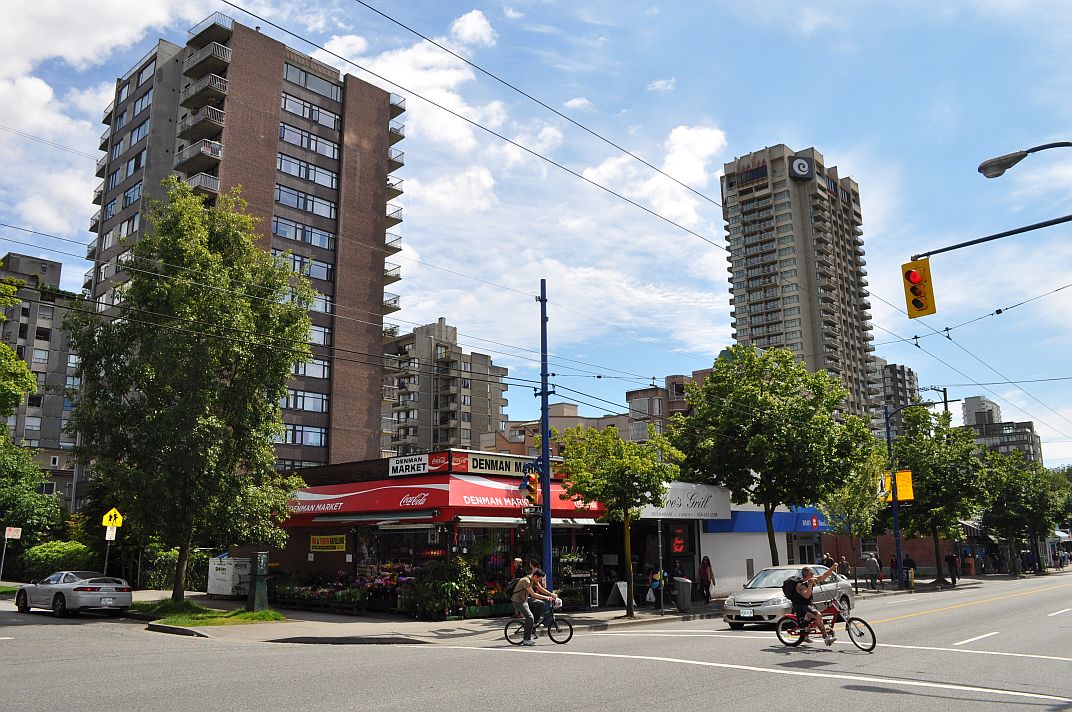
Denman Street, West End Vancouver

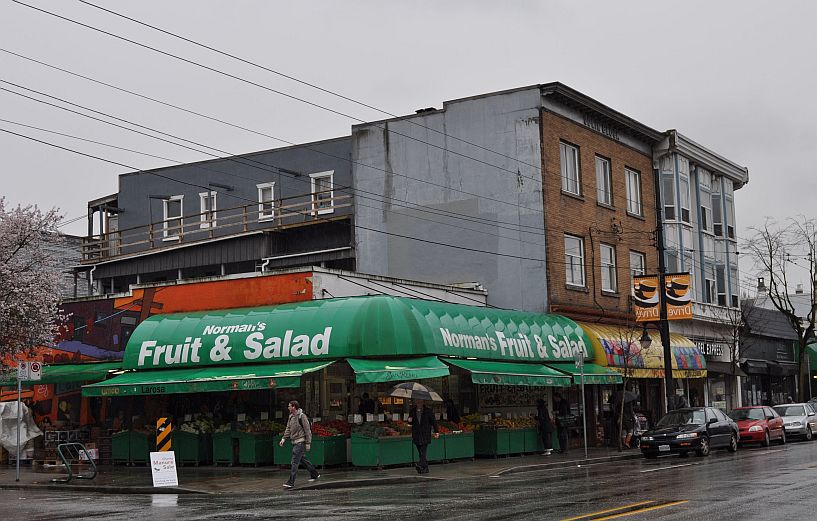
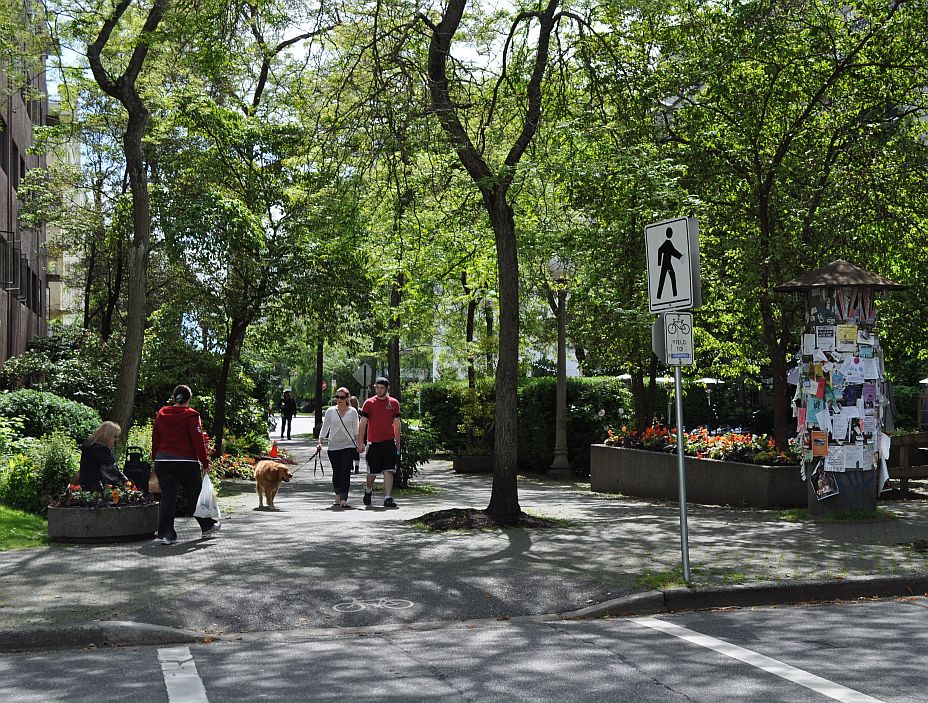
This is the oldest big-city neighbourhood in British Columbia; construction of the tight pattern of residential towers began in 1957.  People said it was the most densely-populated patch of ground in the Commonwealth outside of Hong Kong.  More than 40,000 people live here now; more than half of these get by without a motor vehicle.

Off Haro Street west of Denman. Wikipedia tells us that the section between Denman and the Park is not officially included in the West End, but unofficially it is.  Fraseropolis votes with the unofficial. 40,000 makes for a big urban village — maybe it’s two villages, or three, but the entire area feels like a single walkable piece to me, once you move away from Burrard or Georgia, which form the eastern and northern boundaries of the West End. Continue reading

Will success transform Commercial Drive?

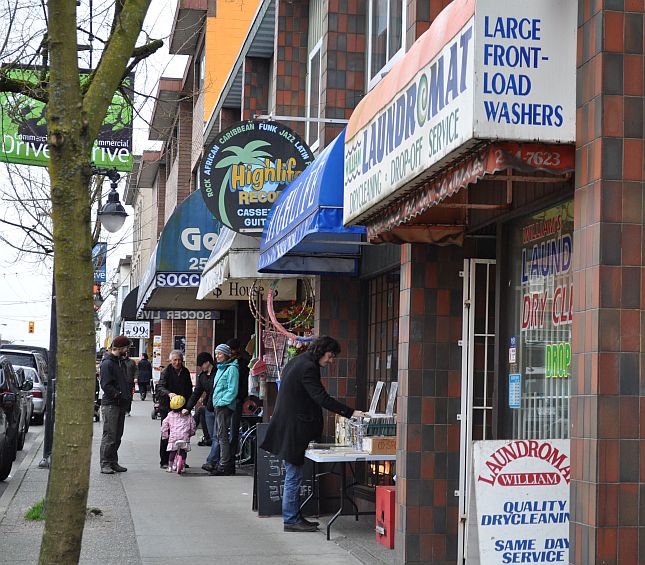
Aside from ethnic enclaves, Vancouver’s Commercial Drive area may be the most distinctive urban village in B.C.’s Lower Mainland.  But its funky, quirky nature attracts visitors, and the visitors attract developer interest, and the developer interest may eventually erase the street’s one-of-a-kind character.

Once a largely Italian district, The Drive morphed during the 1980s into a resolutely downmarket ghetto for artists, thinkers and social activists. When the provincial New Democratic Party was ejected from government in 2001 and reduced to two seats in the legislature, Commercial Drive formed the centre line of the NDP’s remaining strength. Continue reading

Should Metro taxpayers pay for Vancouver streetcars?

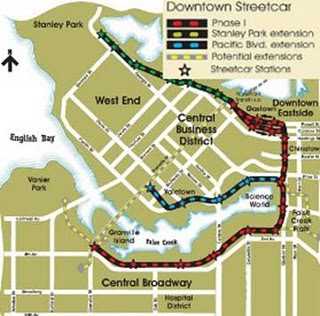
The proposed downtown Vancouver streetcar network

A streetcar plan recently revived by City of Vancouver mayoralty candidate Suzanne Anton is definitely kool.  Anton’s September 21, 2011 announcement is based on a 2005 consultant’s report putting the capital cost of a Granville-Island-to-Waterfront streetcar line at $100 million (in 2005 dollars.)  Annual operating costs are estimated at $3.6 million, with a ridership on the order of 5 million people per year by 2021.

Anton’s funding strategy, vaguely outlined, would see the City joined with private partners to fund the line.  Vision Vancouver Geoff Meggs responded that the streetcar system is not a priority; but if it is to be funded, it should be paid for by taxpayers across Metro Vancouver through TransLink.

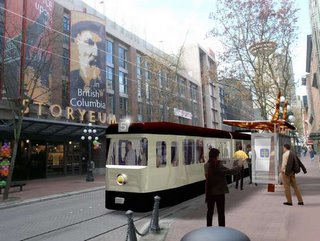
A rendering of the future streetcar in Gastown.

A weekend streetcar service ran on part of this line until 2009, staffed by volunteers and making use of antique cars.  I lived a hundred metres from the track and enjoyed riding to Granville Island on Saturday afternoon.  The new service would be more modern and attractive, but to a large extent it would fulfill the same touristic and local lifestyle function as the old line.  I would love to see a modern streetcar in operation, but it is not an essential component for the regional transportation system.